How AI and Digital Media Are Rewriting Our Reality and What It Means for the Future of Human Experience?
We have entered a moment in history where technology no longer sits quietly in the background of our lives. It shapes what we see, what we believe, how we love, how we work, and even who we imagine ourselves to be. From AI-curated news feeds that define our worldview to algorithms that suggest who we might date, technology now has full autonomy. It makes choices for us long before we consciously make them ourselves.
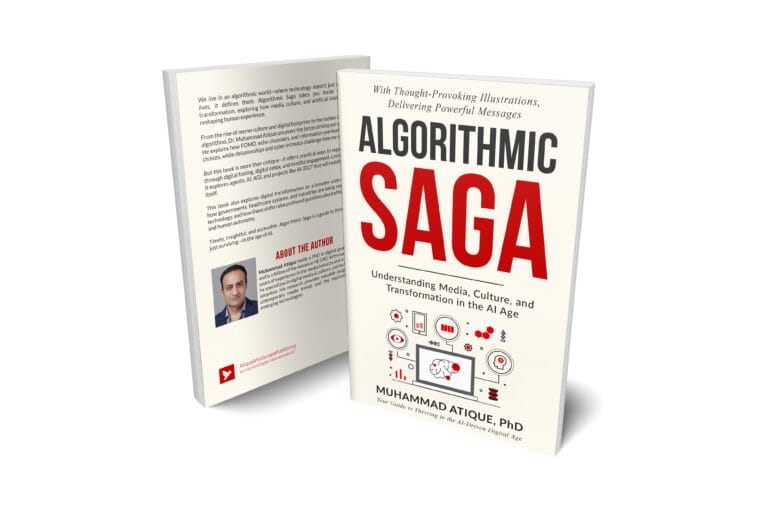
This dramatic shift is the heart of my new book, Algorithmic Saga: Understanding Media, Culture, and Transformation in the AI Age a deep dive into how artificial intelligence, digital media, and online culture are transforming the human experience. I wrote this book to help readers understand the unseen forces influencing their minds, relationships, and perceptions. It is not just a book about technology; it is a book about us, humans living in the age of algorithms.
I’m pleased to share that Algorithmic Saga is now available globally through major platforms, including Harvard Book Store, Amazon, Google Play Books, Barnes & Noble, and Apple Books.
We Are Living Through Technology, Not Just With It
Take a moment to consider how integrated digital life has become. Driverless cars transport passengers in major cities. Drones deliver packages. Robots work in hotels and restaurants. AI algorithms filter every tweet, article, and post we consume. Virtual relationships and “delusionships” have blurred the boundaries between authenticity and imagination.
This isn’t just technological advancement, it’s a cultural evolution.
Our devices and platforms have become architects of identity, shaping our beliefs, expectations, and behaviors. The way we connect, remember, create, and express ourselves has shifted from physical spaces to algorithmically curated digital ecosystems. And the implications of that shift are profound.
Algorithmic Saga examines this transformation with clarity, accessibility, and critical insight.
The Invisible Power of Algorithms
We like to believe we are rational, autonomous beings. Yet every day, algorithms make choices on our behalf:
- What news stories appear on our feed
- Which voices we hear and which we don’t
- What entertainment we consume
- Who we follow, admire, or even date
- How we perceive societal issues
- Which products we buy
- How we interpret “truth”
Algorithms don’t just reflect our preferences, they actually shape them.
In the book, I explore this phenomenon through examples such as filter bubbles, misinformation landscapes, and digital echo chambers. I also discuss how influencers and content creators now act as cultural narrators, shaping identities in ways that traditional media never could.
Understanding this digital influence is no longer optional, it is a form of modern literacy.
Digital Culture: Memes, Podcasts, Gaming, and Online Intimacy
The second section of the book explores how digital culture has reinvented our storytelling traditions, social interactions, and creative expression.
Why do memes spread faster than news? How has podcasting become the new “theater of ideas”? What does online gaming reveal about escapism, community, and virtual belonging? How has digital art reshaped aesthetics and challenged traditional forms? And what happens when intimacy moves online through cyber relationships, avatars, and imagined emotional connections?
Whether it is delusionships, digital nostalgia, or the humor of meme culture, today’s cultural expressions are both fascinating and deeply revealing. They tell us who we are becoming in an age where screens mediate almost every experience.
The Psychology of Living Online
The digital world has given us unlimited access to information, but not without consequences. In Algorithmic Saga, I discuss psychological traps such as:
- FOMO(fear of missing out) A modern day anxiety!
- Information overload
- Choice paralysis
- Doomscrolling
- Digital burnout
These are not just habits they are emotional responses engineered by platforms designed to hold our attention.
The book offers practical strategies to regain control, including digital fasting, digital detox, intentional screen-time habits, and mindful engagement.
The goal is not to reject technology but to use it in ways that support well-being and clarity.
AI, Ethics, and the Future of Human Autonomy
The final section of Algorithmic Saga tackles the crucial question:
What happens when AI systems become decision-makers in governments, healthcare, industries, and personal life?
From agentic AI to the potential rise of AGI (Artificial General Intelligence), I explore how advanced technologies may reshape power structures, societal norms, and human autonomy.
Projects like AI-2027 and rapid digital transformation across sectors reveal a future where machines may influence ethics, governance, and human values more deeply than ever before.
This raises urgent questions:
- Who is responsible when AI makes a decision?
- How do we ensure fairness, transparency, and accountability?
- What moral frameworks should guide technological progress?
- How do we protect human autonomy in a machine-driven world?
The book calls for a balanced, human-centered approach where innovation aligns with ethics and societal well-being.
Why I Wrote This Book
I wrote Algorithmic Saga because we are living in a pivotal moment, one that future generations may look back on as the turning point in human history. Understanding media, culture, and AI is not just an academic exercise; it is essential for navigating the world meaningfully.
This book is an invitation to reflect, question, and reclaim our control in the algorithmic age.
Available Worldwide
I’m proud that Algorithmic Saga is available through all major book platforms, including:
- Harvard Book Store
- Amazon
- Google Play Books
- Barnes & Noble
- Apple Books
Thank you for supporting this work. I hope it sparks meaningful conversations about how technology is shaping our collective future and how we can shape it back.